
- Your cart is empty
- Continue shopping
-
admin2
- Posted on
- Categories:Uncategorized
- 0 comments
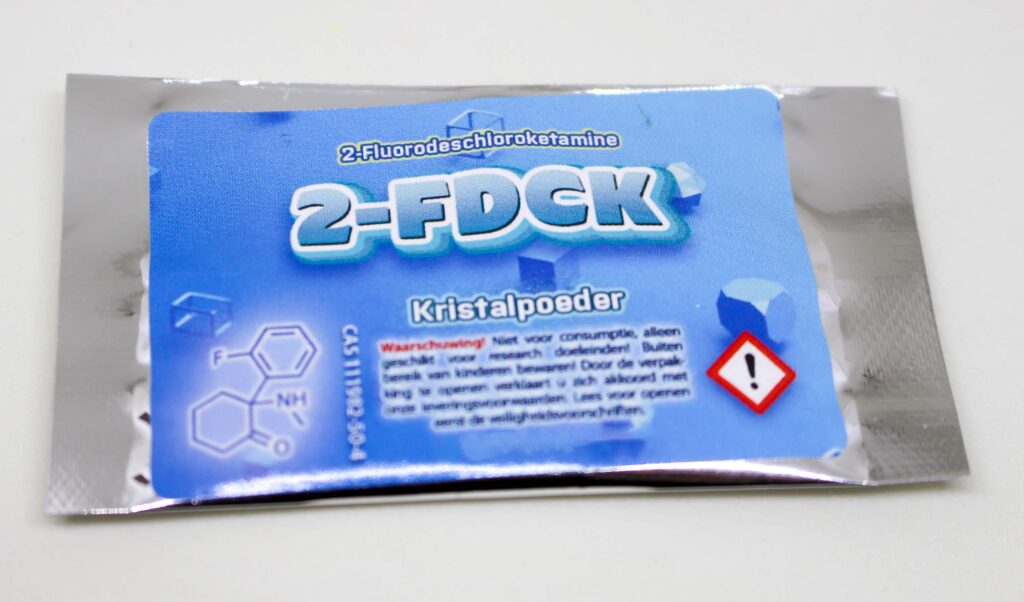
2-Fluorodeschloroketamine (2-FDCK) For sale USA, UK, Canada, Europe:
A Potent Ketamine Analogue
In the evolving landscape of dissociative anesthetics, 2-Fluorodeschloroketamine, commonly known as 2-FDCK, has emerged as a significant compound for both medical research and recreational exploration. As a structural analogue of ketamine, 2-FDCK offers a unique profile that may provide deeper insights into the treatment of depression and the nature of dissociation.
What is 2-FDCK?
2-Fluorodeschloroketamine is an arylcyclohexylamine derivative. Chemically, it is very similar to ketamine, but with a key structural modification: the chlorine atom found in ketamine is replaced by a fluorine atom. This small change alters the molecule’s lipophilicity and metabolism, potentially influencing how it interacts with the brain.
Effects and Pharmacology
Like its parent compound, 2-FDCK is thought to act primarily as an NMDA receptor antagonist. This mechanism leads to its primary characteristic: dissociation. Users often report a separation between the mind and body, accompanied by:
- 1. Altered Perception: Changes in time perception and spatial awareness.
- 2. Visual Distortions: In higher doses, users may experience “holes” or voids in their visual field.
- 3. Cognitive Shifts: A shift in perspective that can lead to profound introspective insights.
Potential Therapeutic Benefits
Recent preclinical studies have sparked interest in the antidepressant capabilities of 2-FDCK. Some research suggests that it may outperform ketamine in the longevity of its antidepressant effects, making it a subject of intense interest for those studying treatment-resistant depression.
Safety and Considerations
As with any research chemical, safety is paramount. 2-FDCK can cause impaired consciousness and agitation if misused. Because it is often found in the “new psychoactive substances” (NPS) market, testing for purity and using harm-reduction practices is strongly advised. Whether you are a researcher or a curious individual, 2-Fluorodeschloroketamine represents a fascinating evolution in the arylcyclohexylamine class, blending the familiar properties of ketamine with unique chemical characteristics.
